

Adulthood 1: The Good Life
A semester-long elective for high schoolers that helps them learn how they’re wired, what they’re good at, and how to cultivate life-giving habits.
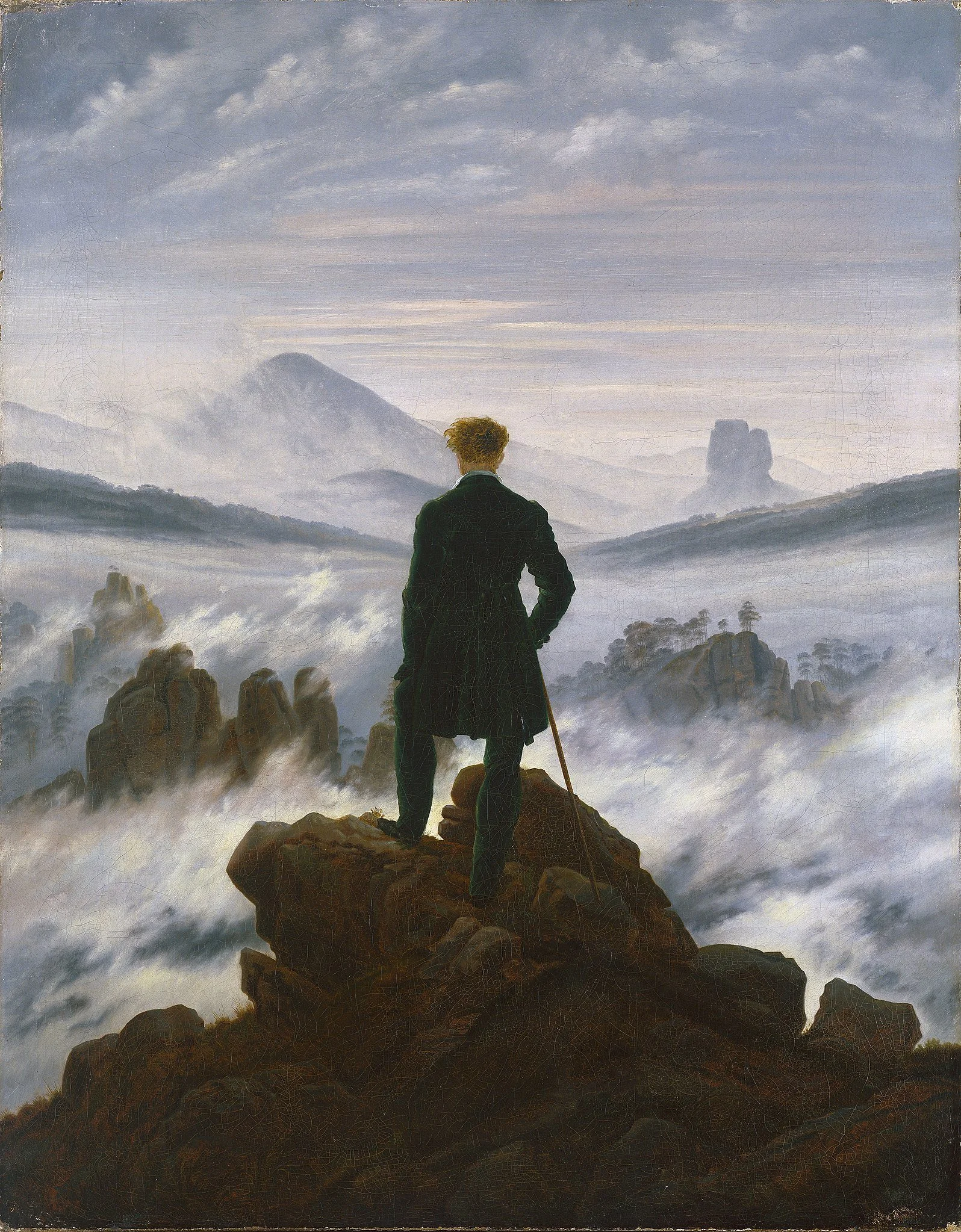
Wanderer above the Sea of Fog (1818), by Caspar David Friedrich
Begin & End With Virtue
This semester-long elective explores timeless wisdom and how it applies to modern, everyday life as young adults. We cover virtue, personal development, vocation exploration, personal spiritual habit practices, etiquette and interpersonal skills, and more.
Students also create a Capstone Project, a semester-long enterprise of their interest—a great experience and deliverable for college applications, resumés, and personal development overall.
Paired with Adulthood 2: The Practicals, these two semester-long classes create a school year geared toward launching your upperclassman student out into the “real world” as a light in the world.
• for 11th & 12th graders •
Note: This class, and Adulthood 2, are offered every-other school year at Scholé Hall. The teaching reflects a Christian worldview with the belief that the purpose of life for all humans is union with Christ, but the only requirements of my students are a good attitude, a willingness to learn, a motivated work ethic, and respect toward others.

Meet the Teacher
Hi! I'm Tsh Oxenreider, but most students call me Mrs. O. I’ve homeschooled my three teenagers for years (one of whom has already finished college), and when I’m not chasing our backyard chickens back into their coop, I’m usually leading a pilgrimage or penning my next book. One of my favorite places to be, however, is in my favorite green chair with a cup of coffee and a good book.
Please note: I teach as a Christian adhering to the historic, universal faith and affirming the Nicene Creed as a faithful summary, and uphold Jesus’ command for Christian unity as he explicitly prayed (John 17:20-23). It should be expected that the teaching in all my classes will reflect a Christian worldview, but the only requirements of my students are a good attitude, a willingness to learn, a motivated work ethic, and respect toward others.
FAQ
-
Students come having done all their work in advance, prepared for a discussion-led class with their peers. Generally speaking, we spend half the class time unpacking and discussing the homework from the week, usually including a Socratic discussion on the current class reading or assigned content. The other half typically includes new content in preparation for the next week's work at home.
-
As an elective, true “homework” in the classic sense is minimal, yet students are expected to participate fully in what's assigned to them. Weekly reading assignments, when they're given, are typically short because the bulk of the work tends to be reflective and/or self-aced.
Likewise, students will get as much out of their Capstone Projects as they are willing to work on them. The good news with those is that they often relate directly to what they might be interested in post-high school—they might write a novel and eventually get it published, for example, or seek out an internship that leads to a job! There's lots of room for creativity here.
-
The books and supply list will be finalized by mid-summer. In the meantime, know that supplies are minimal and largely consist of writing utensils, paper of some sort, and a few books (used are great!).
-
It's not required, but because they reference each other, your student will get more out of both semester-long classes if they take both, and if they take them in order. If you're interested in Adulthood 1, I recommend building on its foundation with Adulthood 2.
-
I have morphed that former year-long class into the two new semester-long classes Adulthood 1 and Adulthood 2.
-
Signing up for a class with me is a commitment. I offer a penalty-free cancellation for three weeks so students and parents can get a feel for the course. After this, if you decide to transfer, move, or drop the class, you must pay half of the remaining tuition. Without this policy, I cannot keep smaller classes profitable or beneficial. Thank you for understanding!
-
Nope, it’s illegal—it’s considered animal abuse in Switzerland because they’re social beings and will get lonely.
-
I’d assume so! Head here for my class rules FAQs, and accommodations policies. (A full handbook will be sent following class enrollment.)
Enroll in Adulthood 1
A semester-long elective for high schoolers that helps them learn how they’re wired, what they’re good at, and how to cultivate life-giving habits.
for 11th & 12th graders
Secure their spot with a non-refundable deposit:
Full Tuition: $350*
remaining balance paid either in full or monthly (first invoice sent before the first day of school)
“It is not the critic who counts; not the man who points out how the strong man stumbles, or where the doer of deeds could have done them better. The credit belongs to the man who is actually in the arena, whose face is marred by dust and sweat and blood; who strives valiantly.”
- Theodore Roosevelt